COULEURS
Color, Heritage, Provenance
Networking and Partnership Call
Summary
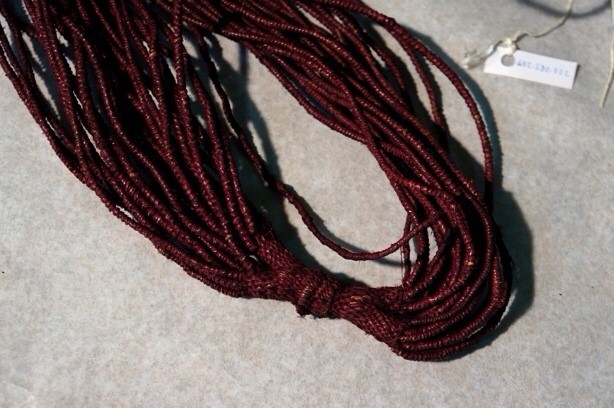
The COULEURS project—African heritage works, materials, and organic dyes—focuses on analyzing the technical characteristics of artifacts, specifically the organic compounds used in coloring Yoruba works, with a view to determining their provenance. The materials and techniques used to make an object provide information that points to its place of creation, workshop, or artist. This data enables provenance research to be initiated from the country of origin rather than solely through European sources, with the aim of determining the territory of origin or locality, or even the workshop or family of origin of polychrome objects from the Yoruba cultural area. It is led by a collective of French, Beninese, and German researchers with expertise in chemistry, conservation, conservation-restoration, anthropology, and archival research. It focuses on Yoruba objects made of wood, leather, plant fibers, or colored textiles dating from before 1930 that feature plant-based colors. A collection of artifacts from European museums—mainly the Musée des Confluences in Lyon and the Museum of the Five Continents in Munich—will be selected and studied. The characterization of the objects, combined with consultation of archives and documents concerning their provenance and acquisition, will make it possible to identify:
– technical practices related to ethnobotanical knowledge and local practices of care, gathering, creation, or rituals,
– source plants linked to a geography of available vegetation,
– specific workshop habits based on technical and cultural choices.
The various clues provided by these material studies will improve our knowledge of the history of the works and enable us to identify technical changes linked to the circulation of products (in a commercial or colonial context). These studies will also highlight a valuable intangible heritage (technical practices, know-how, useful plants) that can feed into contemporary craft practices.
It will cross-reference all the analytical, ethnobotanical, and historical technical clues that may help identify their origin. In turn, this work will be shared with the public in the Yoruba regions and with artisans so that they can take ownership of it and continue to keep their know-how alive and focus more on preserving the plant sources of the original materials used.
In this context, the project will initially focus on establishing a partnership network supported by the Marc Bloch Fund to create a permanent, multidisciplinary, and multinational team capable of working in synergy to improve understanding of Yoruba objects preserved in Europe and, ultimately, to ensure the smooth running of the project.
Keywords: Heritage, materiality, analysis, chemistry, archaeometry, plant colors, Benin, Yoruba, museums, crafts, sculptures, wood, polychromy, textiles, plant fibers, provenance.
Duration
12 months